
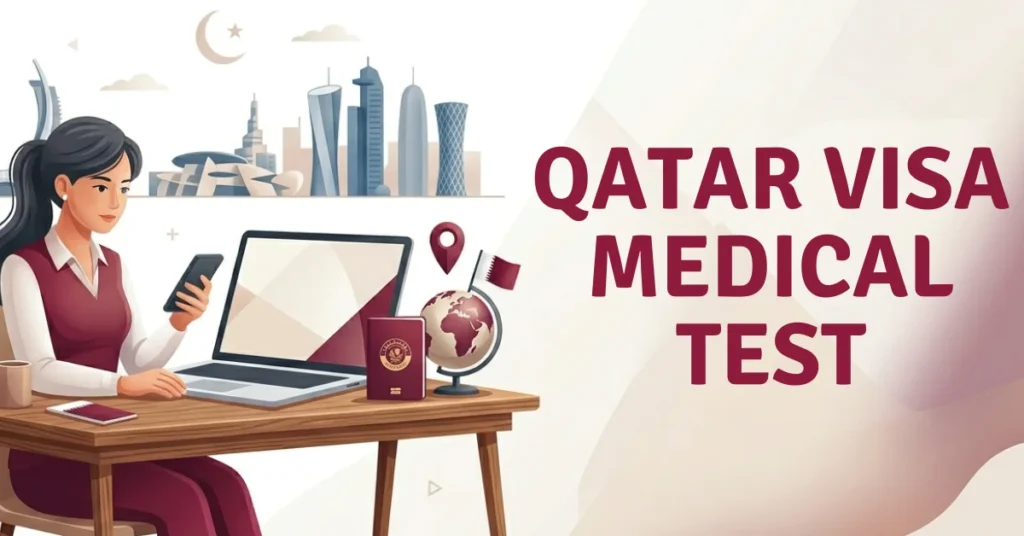
Every expatriate heading to Qatar hits the same wall early: the mandatory medical test. Miss a step, use the wrong clinic, or show up with incomplete documents, and your Qatar visa stalls — sometimes for months.
Who Needs a Qatar Visa Medical Test?
Every expatriate applying for a Qatar Work Residence Permit or long-term residency must pass this screening. No exceptions.
That covers work visa applicants, family dependents, students on long-term programs, and — under 2026 regulations — business visa holders too. All adult dependents qualify, including spouses and older children sponsored under a family visa.
And nobody tells you this upfront: the system you use isn’t a choice. It’s assigned by your passport.
Wafid vs. QVC vs. Medical Commission — Which System Applies to You?
Your nationality determines your path. There’s no opting between systems.
| System | Who Uses It | Where It Happens |
| Wafid (formerly GAMCA) | Citizens of 21 countries | Home country, before departure |
| Qatar Visa Center (QVC) | India, Pakistan, Bangladesh, Nepal, Sri Lanka, Philippines | Home country, before departure |
| Medical Commission | All other nationalities | Inside Qatar, post-arrival |
QVC appointments also capture iris scans and fingerprints in the same visit. That data feeds directly into Qatar’s Ministry of Interior systems — it’s not optional. Henna or cuts on your palms can cause biometric enrollment to fail, which means rescheduling the entire appointment.
If your nationality isn’t on the Wafid or QVC list, your employer arranges the Medical Commission appointment through Qatar’s government e-portal after you arrive.
How to Book Your Qatar Visa Medical Appointment?
Booking is fully digital. Walk-ins aren’t accepted at any stage.
- Wafid: Book at wafid.com/book-appointment. Select your country, city, and Qatar as the destination. The portal assigns an approved clinic automatically.
- QVC: Book at qatarvisacenter.com. Print your appointment letter — you must bring the physical copy.
- In Qatar: Your employer books via the government e-portal. You’ll receive a barcode receipt to present on the day.
Don’t book through third-party agents unless they’re explicitly authorized by the Ministry of Public Health. Tests done at unapproved clinics are invalid — full stop. You’ll end up paying for a complete retest, with no refund on the first one.
What Documents Do You Need to Bring?
Missing one item can get you turned away at the door. Bring all of these:
- Original passport (minimum six months’ validity remaining)
- Printed appointment confirmation letter
- Two to four passport-size photographs
- Qatar visa number or job offer letter
- Employer’s medical form (required for QatarEnergy roles and some specialized positions)
Health declaration and consent forms are usually handed out at the center itself. Some QVC locations send them in advance — check your appointment confirmation to find out whether you need to download them beforehand.
What Happens During the Qatar Visa Medical Exam?
The exam runs two to three hours and moves through several stages in sequence.
Registration and document verification comes first. Staff check your identity and appointment before anything else proceeds. At QVC locations, biometric enrollment follows immediately — facial image capture, fingerprints, and iris scans.
The physical screening covers blood pressure, heart rate, vision, height, and weight. The chest X-ray is a posteroanterior view, specifically screening for active tuberculosis and other lung abnormalities. Remove all metal and jewelry before entering the X-ray room.
Blood draws and lab work cover:
- HIV 1 and 2
- Hepatitis B and C
- Syphilis (VDRL/RPR test)
- Complete Blood Count (CBC)
- Urine analysis (kidney function, diabetes markers, infection)
- Pregnancy test — mandatory for women of childbearing age
Some applicants from high-prevalence countries also get a malaria test. It’s not universal, but it’s worth asking the center in advance if your country of origin is flagged for malaria risk.
Full Breakdown of Tests in the Qatar Medical Exam
| Test | What It Screens For |
| General Physical Exam | Blood pressure, heart rate, vision, height/weight |
| Chest X-Ray | Active TB, TB scarring, lung abnormalities |
| HIV 1+2 Blood Test | Automatic rejection if positive |
| Hepatitis B & C | Infectious disease — automatic rejection threshold |
| Syphilis (VDRL/RPR) | Sexually transmitted infection |
| Complete Blood Count (CBC) | Anemia, infections, general health markers |
| Urine Analysis | Kidney health, diabetes, urinary tract infections |
| Pregnancy Test | Mandatory for women of childbearing age |
What Do Qatar Medical Test Results Mean?
Results arrive within 72 hours via SMS for most Wafid applicants. QVC results typically take up to three business days.
“Fit” means you cleared every screening. Your report uploads digitally to Qatar’s visa processing system, and your application moves forward without any additional submission on your end.
“Unfit” means a disqualifying condition was detected — or a chronic condition like uncontrolled diabetes or advanced kidney failure was flagged as severe. Visa denial follows. You’d think there’d be a grace period built in. There isn’t.
Track your result on the Wafid portal or QVC website using your passport number and nationality.
How Much Does the Qatar Visa Medical Test Cost?
Costs shift based on your nationality, location, and which system applies to you. The registration fee and the clinic examination fee are two separate payments.
| Fee Type | Cost |
| Wafid Online Registration | ~USD $10 (approx. ₹1,160–1,500 INR / PKR 4,500) |
| Wafid Medical Centre Fee — India | ₹7,500–8,500 INR (cash at center) |
| Wafid Medical Centre Fee — Pakistan | PKR 26,000 |
| Wafid Medical Centre Fee — Bangladesh | BDT 8,500–9,500 |
| Medical Commission in Qatar | QAR 100–200 (~USD $28–55) |
| Private Pre-Departure Clinics (e.g., UK) | From £300 — often employer-mandated for QatarEnergy roles |
| Family Visa Medical (Qatar) | QAR 100 per adult dependent |
Refunds don’t exist. If your visa gets denied after you’ve passed the medical, those fees are gone regardless.
Special Cases: Children, Pregnant Women, and Family Dependents
Children under 12 skip the blood work and chest X-ray entirely. They get a basic physical and a vaccination record check. Applicants aged 12 and older may face a full or partial exam at the physician’s discretion — it’s not automatic, but don’t count on the lighter version.
Pregnant women must declare their pregnancy before the exam starts. The chest X-ray gets deferred or conducted with protective shielding. Blood tests proceed as normal. Pregnancy alone won’t disqualify your medical or halt your application.
Adult dependents on a family visa go through the same process as the primary work permit holder. The exam isn’t lighter for dependents — same tests, same standards, same consequences.
Why Qatar Visa Medicals Get Rejected — and What Comes Next
Testing positive for HIV, active TB, Hepatitis B or C, or Syphilis is the leading cause of “Unfit” results. Qatar’s policy on these conditions hasn’t shifted, and there’s no appeal mechanism built into the system.
Uncontrolled chronic illness — unmanaged Type 2 diabetes, advanced kidney disease, severe cardiac conditions — can also trigger rejection. The screening isn’t just about infectious disease. It’s assessing whether an applicant can work without placing strain on Qatar’s public health system.
Here’s what most people don’t realize: documentation problems cause a surprising number of preventable failures. Passport data mismatches, missing photos, outdated reports — these get flagged at registration and send applicants home empty-handed.
Expired results are another trap. Your medical report is valid for 60 to 90 days. If your visa process drags past that window, you’re repeating the full exam from scratch. No extensions, no exceptions.
Using an unapproved clinic is an automatic disqualifier. The Ministry of Public Health maintains a registered list of Wafid and QVC-approved centers. If the center you used isn’t on it, the result doesn’t count.
Frequently Asked Questions
What does “Fit” or “Unfit” mean on my Qatar medical report?
“Fit” means you passed all screenings and your visa application can move forward automatically. “Unfit” means a disqualifying condition was found and your visa will be denied. Results upload directly to Qatar’s visa system within 72 hours — no manual submission needed.
Can I reapply if I fail the Qatar visa medical test?
In some cases, yes. You’ll need to treat the flagged condition, get a medical clearance certificate from a licensed physician, and wait three to six months before retesting. Active HIV or TB typically results in permanent ineligibility — not a temporary hold.
How long is the Qatar visa medical report valid?
Results are valid for 60 to 90 days from the examination date. If your visa process runs longer than that window, you’ll need to redo the full exam before the application can proceed. There’s no extension option.
Is the medical test mandatory for every nationality?
Yes. Every expatriate seeking a Work Residence Permit or long-term visa must pass a medical fitness screening. The system differs — Wafid for 21 nationalities, QVC for six specific ones, Medical Commission in Qatar for everyone else.
Can I get a refund if my visa is rejected after passing the medical?
No. Both the Wafid registration fee and the clinic examination fee are non-refundable, regardless of what happens with your visa application afterward.
What happens if I’m pregnant during the medical exam?
Declare your pregnancy before the exam begins. The chest X-ray is deferred or conducted with protective shielding. All blood tests proceed normally. Pregnancy alone won’t invalidate your medical result.
Do children need the Qatar visa medical test?
Children under 12 are exempt from blood draws and chest X-rays — they get a basic physical and vaccination record check. Applicants aged 12 and older may face a full or partial exam at the examining physician’s discretion.
What if biometric enrollment fails at the QVC?
If henna, cuts, or skin damage prevents successful fingerprint or iris capture, your appointment will need to be rescheduled. Arrive with clean, unmarked hands and no contact lenses if iris scanning is a concern. There’s no workaround available on the day.
What tests are included in the Qatar visa medical exam?
The exam covers a general physical, chest X-ray, blood tests for HIV 1+2, Hepatitis B and C, Syphilis (VDRL/RPR), a Complete Blood Count, urine analysis, and a mandatory pregnancy test for women of childbearing age. Malaria screening may be added based on country of origin.
What’s the difference between Wafid and GAMCA?
They’re the same system. GAMCA (Gulf Approved Medical Centers Association) was rebranded as Wafid. If you see either name on clinic signage or government forms, they refer to the same pre-departure screening network.
Khalid Al-Rasheed is a Qatar-based blogger who simplifies the Qatar visa check process for expats and travelers. He shares clear, up-to-date guides on checking visa status online, approvals, and residency in Qatar.